
Secure Workflows: Protecting Data in Global Outsourced Operations
18 DECEMBER 2025

The client is a prominent US-based non-profit trade association comprising a network of provider organizations dedicated to serving individuals with Autism Spectrum Disorder (ASD). These member organizations operate across various regions and deliver services in diverse settings. Their service delivery models are supported through multiple funding streams, such as government grants and program revenues.
As a trade association, the client regularly conducts professional development events, conferences, and training seminars to support its member organizations and promote industry-wide collaboration and learning.
One of the most critical financial challenges faced by the client lies in the intricate nature of revenue and expense management associated with conferences. Each conference is a significant event with a range of financial transactions linked to it, including participant registrations, vendor payments, venue bookings, and other logistical arrangements.
A considerable portion of both revenues and expenses is related to future-dated conferences. This results in a high volume of advance receipts for registration fees and prepaid expenses for venues, accommodations, speakers, and other services. In many cases, these payments and receipts pertain to conferences scheduled for the next fiscal quarter or even later, making accurate tracking and accounting a complex task.
Proper tagging of these transactions to specific conference identifiers is essential to maintain clarity in financial reporting and to support meaningful comparisons across events and reporting periods. Additionally, failure to account for prepaid expenses and deferred revenues correctly can distort the organization’s financial position and mislead stakeholders relying on these reports for strategic decision-making.
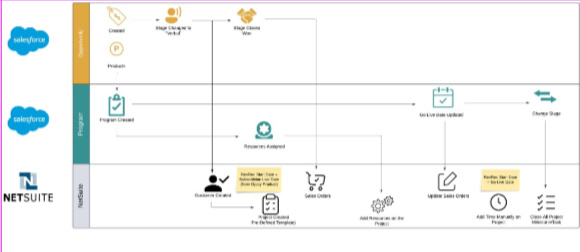
To address these challenges and improve the accuracy of financial reporting, Windy Street (WS) implemented a comprehensive and structured approach that included the following initiatives:
The WS team worked collaboratively with the client’s internal finance team to investigate and resolve a backlog of open transactions, many of which had been incorrectly or insufficiently categorized under “undeposited funds.” These transactions primarily included receipts that had not been properly assigned to the correct conference or revenue category. The team systematically reviewed each transaction and ensured that all were appropriately categorized and tagged to specific conference IDs.
A dedicated project was launched to substantiate each item on the balance sheet. This initiative involved performing detailed reconciliations and justifications for all account balances, including but not limited to, prepaid expenses, accrued liabilities, deferred revenues, etc. This step was crucial for improving the integrity and transparency of the client’s financial statements.
The WS team undertook a historical cleanup exercise where old and stale prepaid expenses that no longer had any future benefit were amortized or written off. Additionally, untraceable expenses, those which couldn’t be validated – were charged off in a responsible and compliant manner to eliminate any lingering inaccuracies on the books.
To ensure continued improvement in financial management and reporting, Windy Street outlined a robust set of future action items for the client:
All revenue and expense transactions, regardless of payment mode (e.g., checks, credit cards, ACH transfers), will be required to include the appropriate conference ID. This policy will be enforced for all forms of spend, including employee reimbursements and credit card expenditures. This will enable real-time, conference-specific financial visibility and enable improved budgeting and performance analysis.
To improve traceability and audit readiness, the client will mandate the capture of check images for all deposits, especially those related to conference receipts. This ensures that each payment can be easily validated and reconciled, reducing errors and manual follow-ups.
With the improved structure around tagging and categorization, the organization will be positioned to produce more accurate and meaningful financial statements. Recognizing prepaid expenses, deferred revenue, and other accrual-related items will allow for more insightful period-over-period comparisons, better cash flow forecasting, and more strategic decision-making.
By partnering with Windy Street, the client has taken significant steps toward streamlining its financial operations and building a robust accounting foundation. The initiatives around categorization, balance sheet substantiation, and cleanup of legacy issues have not only enhanced the reliability of financial reports but also laid the groundwork for continued improvements in financial governance.
As the client continues to grow and expand, especially through its professional conferences, these financial improvements support better oversight, transparency, and decision-making across the organization.

 Purchase Price Allocation of Loss-Making Hospitals